


If a person has back pain in the shoulder blade area, he automatically associates this with the condition of the spine.They are partly right: this long-suffering core of our skeleton takes on heavy loads, which cannot but affect its condition.
But often pain in this area of the back signals a disorder in the internal organs.The nature of the pain corresponds to the disease, so when visiting a doctor it is important to describe its manifestations in as much detail as possible.
What causes pain in the scapular region
Pain is caused by pathological changes in:
- Spine;
- Internal organs;
- Surrounding structures.
Pain in the scapular area and in some rare diseases:
- Fractures of the spine and its systemic lesions;
- Metastases to the spine due to cancer of the stomach and sometimes other organs.
The pain is localized according to the type of disease:
- Above the shoulder blades;
- Under the shoulder blades;
- Between the shoulder blades;
- In the shoulder blades.
Symptoms associated with pathologies of internal organs
The stomach, lungs, liver and heart can project their pain under the shoulder blade - right or left.
If it hurts on the left, this may be a sign of:
- Gastric ulcer: pain is periodic in nature, associated with exacerbations of a seasonal nature.They are accompanied by painful sensations in the upper abdomen.When the pain intensifies, vomiting occurs;
- Myocardial infarction: the disease is accompanied by acute chest pain radiating under the left shoulder blade.Cardiac ischemia has similar signs, but in this case pain also occurs in the left arm;
- Breakthrough of a stomach ulcer: the patient’s body becomes covered in cold sweat, he may feel sick and even vomit.The patient tries to relieve suffering by changing position, but these actions do not give the expected effect;
- Intercostal neuralgia: pain under the left shoulder blade comes in attacks, aggravated by the slightest physical stress.There is a tingling and burning sensation in the area of the heart.It hurts to cough and take deep breaths.
Pain under the right shoulder blade can occur when:
- Psychological problems in the body.At the same time, the patient feels heat in the chest, he may complain of compression and tingling in the heart muscle;
- Pathological changes in the gall bladder: additional symptoms - bitterness in the mouth after fatty, salty and fried foods, pain in the right hypochondrium;
- Pleurisy and pneumonia: pain under the right shoulder blade is reflected when coughing;
- Kidney diseases: in this case, coughing also leads to increased pain, but, unlike pulmonary diseases, the patient experiences difficulty urinating.
Pain associated with pathologies of the spinal column
Problems with the spine can occur after injuries, fractures or bruises.But there are also diseases that have no obvious causes.And all of them manifest themselves as pain in the scapular region.
For any pathology of the spine, pain between the shoulder blades is necessarily accompanied by:
- Stiffness;
- Pins and needles sensation;
- Numbness.
Osteochondrosis
If tissue nutrition is disrupted, dystrophic changes occur in them.In the spinal column, this process affects the intervertebral discs.They can no longer resist the pressure that the vertebrae exert on them.Loss of elasticity in the discs leads to compression of the spine.The nerve endings of the spinal cord come under pressure, which is where severe pain occurs.
The body tries to protect the spine from heavy loads by growing bone tissue along the edges of the vertebral processes.Bone growths are called osteophytes.They can be removed, but against the background of osteochondrosis they will grow again.
Pain in osteochondrosis is localized at the site of damage to the spinal column.If the cervical spine is affected, the patient has pain on the right side of the neck in the morning.The pain radiates to the shoulder and arm, felt above the shoulder blade.You may feel dizzy, and the pain intensifies with deep breaths and coughing.
Osteochondrosis of the thoracic region manifests itself as pain between the shoulder blades - to the right and left of the spinal column.Sneezing, coughing, and sudden movements can increase the pain.When you try to straighten your shoulders, your chest and interscapular area begin to crunch.
It becomes difficult for a person to breathe through the chest, as the mobility of the ribs decreases, and he unconsciously switches to breathing with the stomach.
Osteochondrosis is treated with a conservative method.The patient is prescribed:
- Painkillers and anti-inflammatory drugs;
- Physiotherapeutic procedures;
- Therapeutic gymnastics;
- Reflexology;
- Massages;
- Spinal traction;
- Manual therapy.
If none of the treatment methods is effective, surgeons get down to business.
Spondyloarthrosis
The symptoms of this disease are similar to osteochondrosis.But in this case, the intervertebral disc is displaced, not depleted.The hyaline cartilage is forced to bear the load.In such extreme conditions, its tissue becomes thinner and loses its ability to perform its functions.
If spondyloarthrosis is not treated, the entire joint may become inflamed, and then completely lose mobility.The patient's condition is aggravated by osteophytes.
Scoliosis
Curvature of the spinal column relative to its axis to the right or left is common - almost half of humanity is affected by this disease.But for most, the disease is not clearly expressed, which is why pain appears periodically - if a person overstrains his back, or stands or sits in one position for a long time.
Early scoliosis cannot be visually determined, so if pain occurs in the scapular region, it is in the patient’s best interests to consult a doctor.He will prescribe an x-ray - direct and lateral.
With further development of scoliosis, it can be detected independently: the “zigzags” of the spinal column become clearly defined.Advanced scoliosis is also determined by the relative position of the shoulders - one of them will be lower than the other.

Treatment of scoliosis is a long-term process even with its high intensity.Massages, special exercises and wearing a corset will help get rid of spinal curvature.
Intervertebral hernia
The intervertebral disc consists of:
- Gel-like core;
- The fibrous ring, consisting of fibers;
- Two thin layers of cartilage that cover the discs above and below.
The core is located inside the ring, and the cartilage tissue, closing the structure, simultaneously serves as a conductor of nutrition from the vessels of the vertebral body to the disc.
Pathological changes in the vertebrae lead to disruption of metabolic processes in the intervertebral discs.Their thickness decreases, the fibrous ring cracks under the influence of loads, opening the way out to the gelatinous mass of the nucleus.This process is accompanied by severe pain.It is concentrated at one point, but sometimes there is a return to the pulmonary and cardiac regions.
Intervertebral hernia in the thoracic region is extremely rare, therefore, when pain appears in the scapular region, the patient is first checked for the presence of other diseases.
Intervertebral hernia is treated with anti-inflammatory drugs, physiotherapy, and special exercises.In severe conditions, only surgery can help.
Advanced pathology causes damage to the pelvic organs and paralysis of the legs.
Spinal tuberculosis
Tuberculosis microbacteria can affect any part of the spine, but 60% of cases occur in the thoracic region.Most often men suffer from this disease.Mostly a couple of vertebrae are involved in the process, but there are cases when tuberculosis spreads to three or more.
Symptoms of the disease may vary depending on the number of vertebrae affected.But there is one constant sign - pain.If it is felt between the shoulder blades, this indicates damage to the cervical vertebra.
It also hurts with tuberculosis of the thoracic region, but in that case the pain will radiate (give) to the chest, groin or abdomen.Patients complain of burning, twisting, and “drilling” in the back.
Spinal tuberculosis is difficult to diagnose; severe pain appears already at the stage of various complications.If you have the slightest suspicion of this disease, immediately go to a specialist for examination.
Overvoltage and hypothermia
If the back is overloaded, painful sensations may also appear in the scapular area.This phenomenon in itself is not considered a disease, but constant overload can cause osteochondrosis, curvature of the spine, and the formation of intervertebral hernias.
Seamstresses, drivers, surgeons, people engaged in sedentary work, etc. complain of back pain.If hypothermia is added to overexertion (drafts, running air conditioning), you can get a lumbago - severe pain concentrated below the shoulder blades or in the spine.
This trouble is treated with warming ointments, anti-inflammatory drugs and massages.
Myositis
Flu, ARVI, severe hypothermia can lead to myositis - inflammation of muscle tissue.Most often, the muscles located in the scapular region are affected by this disease.This condition does not threaten the body with anything terrible, but the aching pain creates discomfort.
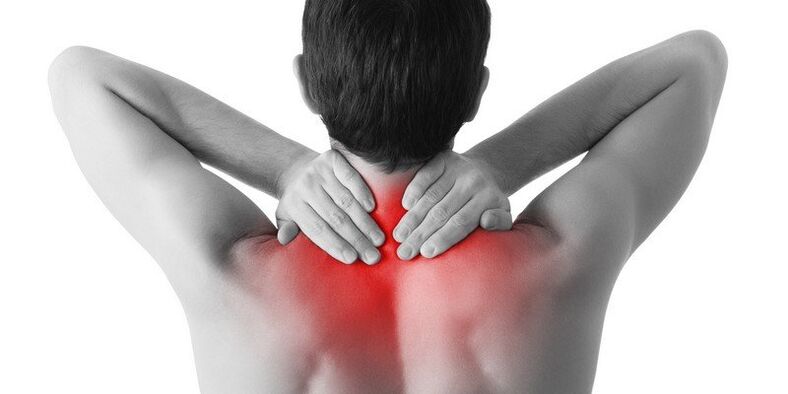
Painkillers and warming ointments ease suffering.
Pain in the shoulder blades
Painful sensations appear for several reasons:
- Fracture or injury caused by a fall.The shoulder joint swells, it hurts to move the limb;
- Osteomyelitis (inflammation of bone tissue): accompanied by an increase in temperature, fever due to intoxication of the whole body;
- Pterygoid scapula: this effect is caused by damage to the serratus anterior (located on the side of the chest), paralysis of the rhomboid, trapezius muscles or their traumatic rupture (which affects circus acrobats and gymnasts, professional athletes).
If the synovial bursa is inflamed, the shoulder blade begins to crunch.In addition to this trouble, the patient is bothered by heaviness and clicking in the shoulder joint.
Diagnostics
Since pain in the scapular area of the back signals one of many diseases, the examination is carried out using different methods:
- Chest X-ray;
- Laboratory research;
- Ultrasound;
- Magnetic resistance or computed tomography;
- ECG.
All examinations are prescribed by the surgeon - if you have back pain, go to him first.But in the future, based on the research results, he will need consultation:
- Orthopedist;
- Gastroenterologist;
- Neurologist;
- Pulmonologist.

If for any reason the doctor did not pay attention to the accompanying symptoms, go for a consultation on your own initiative.
Treatment
Self-medication for pain in the scapular area is strictly contraindicated.The maximum that a patient can afford is to take painkillers and analgesics.The appointment should be one-time and only if it is necessary to relieve pain before visiting a doctor.
Treatment is prescribed by a doctor: usually, to alleviate the condition, it is enough to take analgesics, chondroprotectors, and anti-inflammatory drugs.In addition, the doctor describes a treatment regimen designed to eliminate the root causes of pain in the scapular region.